Alpha Connect · Community Breast Cancer Awareness Month October 2026
Think Pink: Breast Cancer Awareness Month
October is Breast Cancer Awareness Month. It is a time to support people in treatment, celebrate survivors and remember those we have lost. It is also a reminder that knowing your body and getting screened can save lives. Here is how the Alpha family is taking part, and what every one of us can do.
 Wear Pink Day · Friday, October 23
Illustrative image.
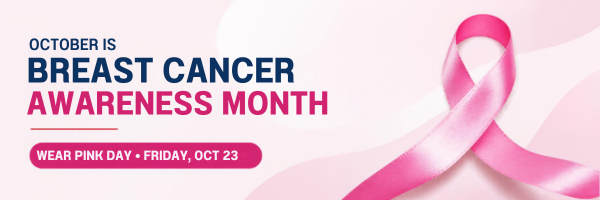
Friday, October 23, 2026
Wear pink with the Alpha family
On Wear Pink Day, the Alpha family is wearing pink to support those in treatment, celebrate survivors and remember those we have lost. A pink shirt, ribbon or scarf at school, at work or at home lets someone know they are not alone.
- Wear it Put on something pink on Friday, October 23: a shirt, scarf, ribbon or pin.
- Snap it Take a photo with classmates, coworkers or family.
- Share it Post it, tag the Alpha family and add #AlphaFamily .
 Alpha Career College
Supporting students who are building their futures, many while caring for loved ones along the way.
Alpha Career College
Supporting students who are building their futures, many while caring for loved ones along the way.
 Alpha Katering
Knowing that a shared meal can bring comfort, connection and a little joy on a hard day.
Alpha Katering
Knowing that a shared meal can bring comfort, connection and a little joy on a hard day.
 Alpha Resources Ltd.
Supporting individuals and organizations with the care and resources they need.
Alpha Resources Ltd.
Supporting individuals and organizations with the care and resources they need.
Why it matters
About 1 in 8 women in Canada is expected to develop breast cancer in her lifetime. Chances are, it touches someone you know.
Finding it early makes a difference
Five-year survival for women is close to 100% when breast cancer is found at stage 1, the earliest stage. That is why knowing your body and getting screened matter so much.
Sources: Canadian Cancer Society, Breast cancer statistics (2026 estimates); Public Health Agency of Canada, Breast cancer; Canadian Cancer Society, Survival statistics for breast cancer (five-year net survival by stage, based on Statistics Canada research, 2023). Survival statistics are general estimates and cannot predict any one person's outcome.
Know your normal: how to check
You do not need a special routine. The Canadian Cancer Society says there really is no right or wrong way to examine your breasts. The goal is to know how they usually look and feel, so you notice when something changes. Remember three simple words:
If you would like a simple way to start, here is one approach:
- Step
Look in the mirror
Stand in front of a mirror and look at both breasts with your arms at your sides, then with your hands pressed on your hips, then with your arms raised.
- Compare size, shape and symmetry.
- Look for puckering, dimpling or skin changes.
- Check whether a nipple has turned inward.
- Step
Feel with your finger pads
Use the flat pads of your three middle fingers, not the tips. Move in small circles.
- Use light pressure for tissue near the skin.
- Use medium pressure to feel a little deeper.
- Use firm pressure for tissue close to the chest and ribs.
- Step
Cover the whole area
Check the entire breast area, up to the collarbone and under the arms, as well as the nipples.
- Think of each breast as a clock face or a pie.
- Move from the outer edge toward the nipple, one section at a time.
- Take your time. A few minutes is enough.
- Step
Try lying down, or in the shower
Lying on your back spreads the breast tissue so it is easier to feel. A pillow under your shoulder, with that arm behind your head, can help.
- In the shower, soapy skin lets your fingers glide.
- If you menstruate, the week after your period can be a good time, as breasts may be less tender.
Found a change? Do not panic. Most breast changes are not cancer. Lumpiness or tenderness before a period can be normal. Still, tell your healthcare provider about anything new so it can be checked. A self-check does not replace screening.
Changes to tell your healthcare provider about
- A new lump in the breast or armpit
- Pain in any area of the breast
- A change in the size or shape of the breast
- Dimpling, or skin that looks like an orange peel
- A nipple that turns inward or looks flattened
- Redness or flaky skin on the breast or around the nipple
- Nipple discharge other than breast milk, including blood
Sources: Canadian Cancer Society, Know your breasts; Rethink Breast Cancer, Breast Health 101 (Touch, Look, Check); Mayo Clinic, Breast exam for breast awareness (mirror check, pressure and pattern); Public Health Agency of Canada (signs). Illustrations are simplified drawings.
Know your risk factors
There is no single cause of breast cancer, but some factors may increase the risk of developing the disease. Tap to open each list.
About you
- age, as 83% of the cases of breast cancer occur in females over 50 years old
- family history of breast cancer, especially:
- in a mother, sister or daughter diagnosed before menopause
- if a mutation on the BRCA1 or BRCA2 genes is present (these genes help repair damaged DNA, so mutations can increase the risk of developing breast cancer)
- previous breast disorders with biopsies showing abnormal cells
- having dense breasts, which means there's a high proportion of fibrous or glandular tissue
Life and health history
- beginning to menstruate at an early age
- menopause occurring after age 55
- taking hormone replacement therapy (estrogen plus progestin) for more than 5 years
- having a full-term first pregnancy after the age of 35 or no full-term pregnancies
- being overweight or obese while postmenopausal
- drinking alcohol
Source: Public Health Agency of Canada, Breast cancer. Risk factors are quoted from the source.
Myth or fact?
There is a lot of information out there, and not all of it is true. Tap each card to reveal the fact.
Sources: Canadian Cancer Society, Myths and controversies, Know your breasts and Breast cancer statistics; Public Health Agency of Canada; Ontario.ca.
Screening in Ontario

Screening looks for breast cancer in people who have no signs or symptoms, often before a lump can be felt. Through the Ontario Breast Screening Program, mammograms are covered by OHIP.
- Ages 40 to 49: you can book a mammogram yourself, with no referral. Talk with a doctor, nurse practitioner or Health811 about whether it is right for you.
- Ages 50 to 74: a mammogram every 2 years is recommended. No referral is needed.
- Ages 30 to 69 at high risk: if a doctor or genetic counsellor confirms you are at high risk, yearly screening with a mammogram and an MRI or ultrasound is recommended.
Have symptoms? See a healthcare provider right away instead of waiting for a screening appointment.
Sources: Ontario.ca, Breast cancer testing and prevention; Ontario Health (self-referral from age 40 since October 8, 2024; more than 240 screening locations).
Your turn
Make your pink pledge
One small promise can make a big difference. Write yours, turn it into a pink pledge card, then share it and tag the Alpha family.
Tag us when you post your pledge or your Wear Pink Day photo:
- @alphacareercollege on Instagram (opens in a new tab)
- @alphahcr on Instagram (opens in a new tab)
- @alphakateringinc_ on Instagram (opens in a new tab)
For Instagram or TikTok, download your card, post it from the app and paste the caption. Nothing you type here is saved or sent to us.
Support and trusted information
1-888-939-3333 · cancer.ca
Call 811
This post is for general awareness only and is not medical advice. Please speak with a healthcare provider about your own health.
To everyone touched by breast cancer: you are in our thoughts, and you are not alone.
With love, Alpha Career College · Alpha Resources Ltd. · Alpha Katering