Intensive Case Management
for Addictions and Homelessness
Certificate Program
You're Only 5 Weeks Away From Becoming a Great Case Manager
Discover Our Intensive Case Management
for Addictions and Homelessness Certificate Program
Our Intensive Case Management for Addictions and Homelessness Certificate program prepares social service professionals for a case manager's increased duties and responsibilities. Over the course of five weeks, you will discover the step-by-step process of case management, learning everything from intake and assessment to referrals and termination.
You’ll also explore current practice trends and considerations, legal issues, common ethical issues, the importance of maintaining accurate client information, and how best to collaborate with other service providers. Upon graduation, you will be well-equipped with the knowledge and skills needed to be a professional Case Manager!

Case Manager Career Opportunities
Average Salary (Canada)
- $65,000/year*
Number of Job Openings (Canada: 2019-2028)
- 49,000**
*Glassdoor **Canada Job Bank
Alpha Student Experiences
"Alpha Career College is an excellent school with very professional instructors and staff members. The type of support I received there was impeccable."
Admission Requirements
- An Grade 12 Ontario Secondary School Diploma (OSSD), or
- Equivalent: Foreign credentials must be translated into English and assessed for Grade 12 equivalency by a recognized organization, or
- Mature Student with a score of 11 or more on the Wonderlic SLE
***This program does not require approval under the Ontario Career Colleges Act, 2005.
Program Outline
Five weeks of comprehensive case management education
Begin Your Journey to Becoming a Intensive Case Manager
Frequently Asked Questions (FAQs)
Is the program accredited?
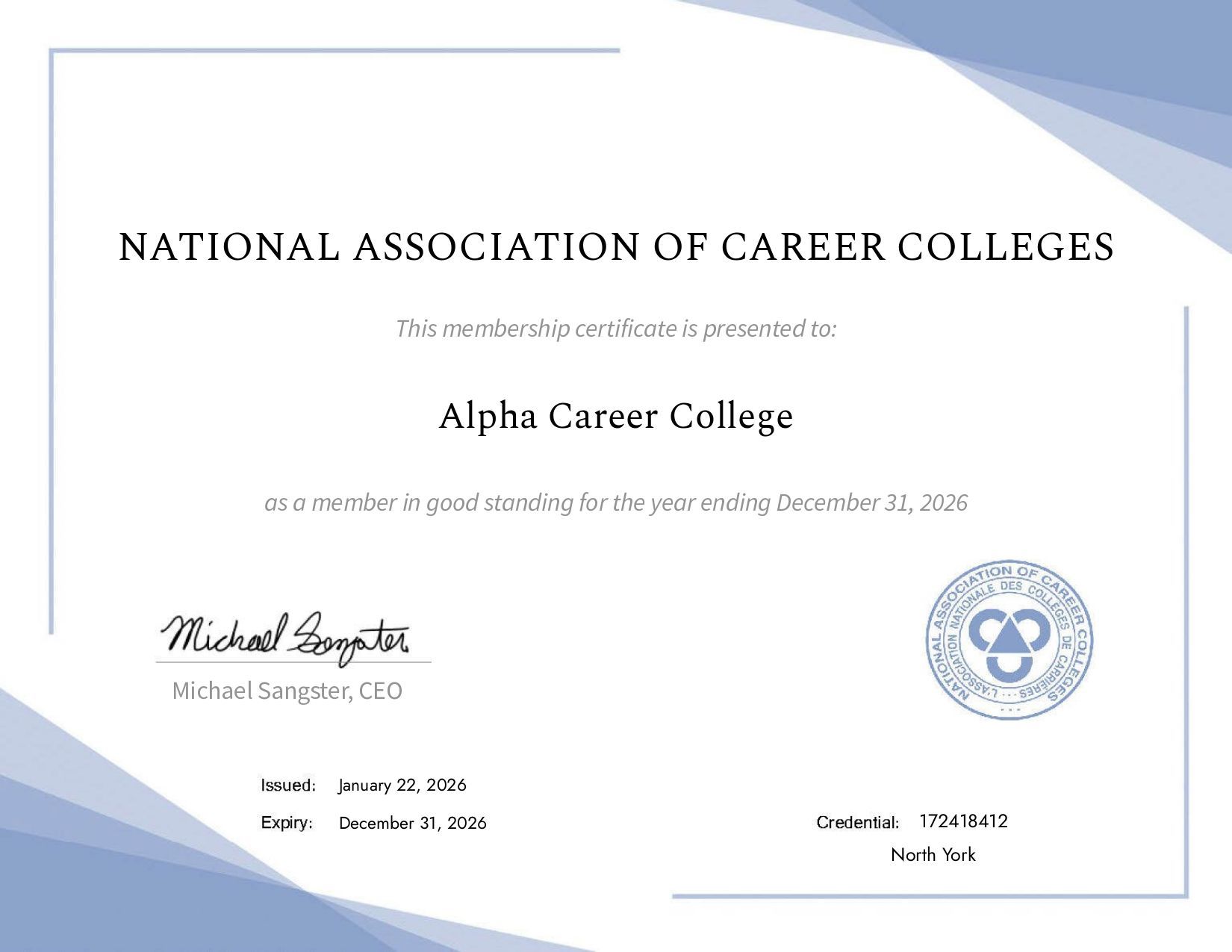
Alpha Career College is a registered career college in Ontario and operates under the regulatory framework of the Ministry of Colleges & Universities.
Under Ontario’s career college regulations, certain short-duration programs, including programs of 40 instructional hours or less, do not require individual program approval by the Ministry.
Our Case Management program falls within this category and is offered by Alpha Career College as a non-vocational micro-credential in accordance with the requirements applicable to registered career colleges.
Am I guaranteed a job after completing the program?
Employment is not guaranteed. However, our programs are designed to provide students with relevant knowledge and practical skills to help prepare them for employment opportunities in their field.
Many of our graduates have successfully found employment after completing their programs. Employment outcomes depend on factors such as available opportunities, qualifications, experience, interview performance, and individual employer requirements.
What will I learn in the Intensive Case Management program?
The program provides practical knowledge and skills used in case management and community services. Students learn client assessment, case planning, documentation, goal setting, referrals, advocacy, professional boundaries, crisis response, communication, and how to connect clients with community resources.
The goal is to help you understand how to support clients with complex needs while working effectively within a community or social service setting.
Do I need previous social service experience?
No. You do not need previous social service experience to take the program.
The program suits both newcomers to the field and individuals with experience in social or community services who want to strengthen their case management skills.
Where can I work with this certificate?
Graduates may pursue opportunities in a variety of social and community service settings, including:
- Homeless and emergency shelters
- Supportive and transitional housing
- Community agencies
- Mental health and addiction services
- Residential programs
- Youth and family services
- Newcomer and settlement services
- Community outreach programs
- Non-profit organizations
Is there a placement or practical component?
The Intensive Case Management program focuses on developing practical, job-relevant case management skills.
Students have opportunities to apply what they learn through case scenarios, documentation exercises, problem-solving, case planning, and other practical learning activities.
In addition, students may choose to participate in an optional 40-hour job placement, providing valuable exposure to real-world workplace settings and the opportunity to apply their skills in a professional environment.
This optional placement is designed to enhance hands-on experience and support career readiness.
Can this program help someone who already works in social services move into a case management role?
Yes. The program can be valuable for individuals already working in shelters, supportive housing, community services, residential programs, mental health services, or other frontline roles who want to strengthen their case management knowledge and prepare for greater responsibilities.
Completing the program does not guarantee a promotion or a Case Manager position, but it can help you build additional skills and strengthen your qualifications when opportunities become available.
Is this program suitable for someone looking to change careers?
Yes. The program can be a good starting point for someone interested in transitioning into the social and community services sector.
You will learn foundational and practical case management skills that can help you better understand the field and prepare for entry-level opportunities. Your previous work and life experience may also provide transferable skills that are valuable in this sector.
What is the difference between a Case Manager, Case Worker and Support Worker?
Although job titles and responsibilities can vary by organization, there are some general differences:
Case Manager: Oversees and coordinates client care and support services while managing case files and related administrative responsibilities. Conducts comprehensive assessments, develops individualized care plans, monitors client progress, provides education and advocacy, ensures compliance with care plans, coordinates with healthcare and community service providers, and promotes effective, high-quality interventions to support positive client outcomes.
Case Worker: Typically works directly with clients to help address specific needs, access services, complete applications, develop goals, and connect with community resources. In some organizations, Case Workers perform many of the same duties as Case Managers.
Support Worker: Usually provides more direct day-to-day assistance to clients. This may include emotional support, life-skills assistance, crisis support, helping clients follow their service plans, and connecting them with appropriate resources.
The Intensive Case Management program helps students understand how these roles work together to support clients and how strong case management skills can support career growth within the sector.
What jobs can I get with an Intensive Case Management Program certificate?
The Intensive Case Management Program can help prepare you for a variety of roles in the social and community services sector. Depending on your previous education, experience, and the employer’s requirements, opportunities may include:
- Case Manager
- Case Management Support Worker
- Housing Support Worker
- Shelter Support Worker
- Community Support Worker
- Outreach Worker
- Mental Health Support Worker
- Residential Support Worker
- Client Support Worker
Graduates may find opportunities in community agencies, shelters, supportive housing programs, mental health organizations, residential programs, and other social service settings.
Some positions may require additional education, experience, certifications, or other qualifications as determined by the employer.
Do you accept OSAP or offer other funding options?
Alpha Career College is not currently an OSAP-designated school. However, students may be eligible for other government-funded programs, such as Better Jobs Ontario.
We also believe education should be accessible and affordable. That is why we offer flexible payment plans to help students manage the cost of their education over time.
Our Admissions team can work with you to explore available funding and payment options and help you find what works for you.